


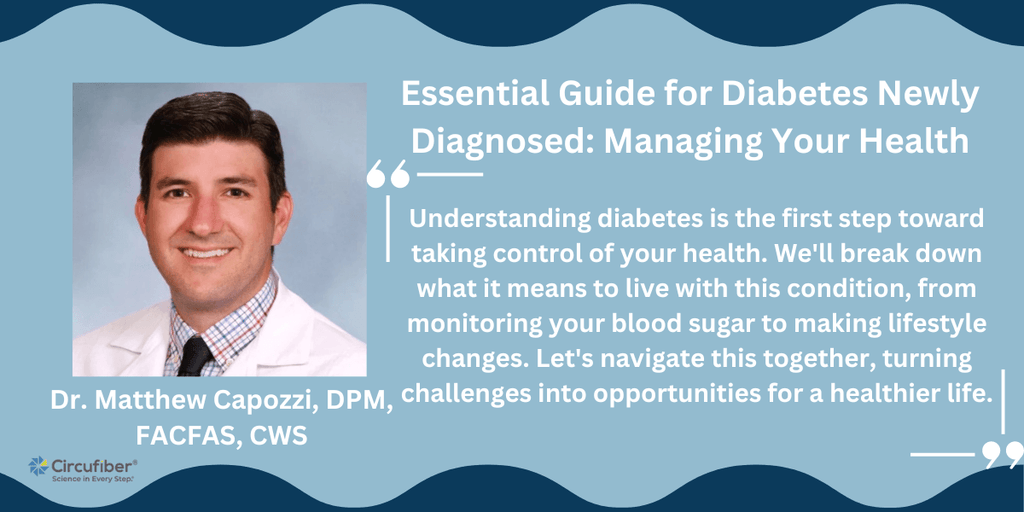
Written by Dr. Matthew Capozzi, DPM, FACFAS, CWS (board-certified foot surgeon and wound specialist) · Medically reviewed by the CircuFiber Scientific Advisory Board · Updated: October 27, 2026
If you have just been diagnosed with diabetes, the first steps are to learn which type you have, start checking your blood sugar, and make a plan for food, activity and medication with your healthcare team. Diabetes is a condition in which the body cannot process glucose normally, and both type 1 and type 2 are managed day to day through blood sugar monitoring, a balanced diet, regular physical activity and, where prescribed, medication. Receiving a new diabetes diagnosis can feel overwhelming, but it is a path many have walked before, and with the right knowledge you can manage it effectively.
Key Takeaways
- Diabetes is a problem with how the body processes glucose, its main energy source. Type 1 diabetes means the body cannot produce insulin; type 2 diabetes means the body does not use insulin effectively.
- Type 1 diabetes requires lifelong insulin therapy, while type 2 diabetes can often be managed through lifestyle changes and medication.
- Blood sugar monitoring is the foundation of management. Testing at consistent times and logging results alongside food, activity and medication shows how your body responds.
- Four daily levers keep blood sugar stable: a balanced diet, about 150 minutes of moderate exercise per week, stress management, and taking medication exactly as prescribed.
- Regular check-ups matter. Diabetes is a leading cause of blindness, kidney failure and heart disease among adults, and routine visits let your care team adjust your plan before complications develop.
What does a new diabetes diagnosis actually mean?
A diabetes diagnosis means your body can no longer process glucose, a crucial energy source for our cells, the way it should. When we find ourselves or our loved ones facing a diabetes diagnosis, it's vital to grasp the basics of this condition. At its core, diabetes revolves around our body's ability to process glucose. Understanding diabetes is the first step toward taking control of your health, and if you are unsure how the diagnosis was made, our guide to diabetes tests and diagnosis explains the blood tests involved.
Type 1 vs. type 2 diabetes
There are two primary forms of diabetes, each demanding a nuanced understanding. Type 1 diabetes, often diagnosed in childhood, stems from the body's inability to produce insulin, a key hormone in regulating blood glucose levels. Type 2 diabetes typically develops over time and is characterized by the body's ineffective use of insulin. Both types require careful monitoring of blood sugar levels to prevent potential complications. For a side-by-side comparison, read prediabetes versus type 1 and type 2 diabetes.
| Feature | Type 1 diabetes | Type 2 diabetes |
|---|---|---|
| What goes wrong | The body cannot produce insulin | The body does not use insulin effectively |
| Typical onset | Often diagnosed in childhood | Typically develops over time |
| Core treatment | Lifelong insulin therapy | Lifestyle changes and, often, medication |
| Blood sugar monitoring | Required | Required |
Key facts to remember
- Type 1 diabetes requires lifelong insulin therapy.
- Type 2 diabetes can often be managed through lifestyle changes and medication.
- Diabetes is a leading cause of blindness, kidney failure, and heart ailments among adults.
What symptoms should a newly diagnosed diabetic watch for?
The symptoms that most often lead to a diagnosis are excessive thirst, frequent urination, unexplained weight loss, and increased fatigue, and they are also the signs that blood sugar is running high after diagnosis. Recognizing the symptoms early is crucial for timely intervention. If you're experiencing any of these symptoms, it's essential to consult a healthcare professional without delay. Once you start treatment, you also need to know the opposite problem: how to recognize low blood sugar (hypoglycemia), which can happen with insulin and some diabetes medications.
Proper management of diabetes hinges on regular monitoring of blood glucose levels. This not only aids in assessing how well your diabetes is controlled but also helps in adjusting your diet, physical activity, and medications accordingly.
How do you monitor blood sugar when you are newly diagnosed?
Blood sugar monitoring means checking your glucose with a meter at consistent times each day and recording the results so you and your care team can see patterns. When we're diagnosed with diabetes, understanding how to monitor our blood sugar levels becomes a pivotal part of our daily routine. This practice isn't just about keeping numbers within a certain range; it's about empowering ourselves to take control of our health. Accurate and consistent monitoring can help us make informed decisions about diet, exercise, and medication.
Initially, the concept might seem daunting. But, with the right tools and techniques, we'll soon find it to be a manageable, and crucial, aspect of our diabetes care. Blood glucose meters are the most common devices used for this purpose. They're compact, relatively easy to use, and capable of providing immediate feedback on our blood sugar levels. If you want the reasoning behind the routine, see why you should check your blood sugar.
The three-step monitoring routine
- Choose a glucose meter: There are various models available, each with its own set of features. It's important to select one that suits our lifestyle and meets our specific needs.
- Test regularly: Consistency is key. Testing at the same times each day provides us with more reliable data to assess how well our diabetes management plan is working.
- Log your results: Keeping a record of our blood sugar levels, along with notes on diet, exercise, and medication, can give us valuable insights into how our body responds to different situations and helps in planning our care.
Tips for accurate readings
- Ensure hands are clean and dry before testing.
- Rotate testing sites to prevent soreness.
- Calibrate the glucose meter as recommended by the manufacturer to ensure accuracy.
Understanding our blood sugar patterns is crucial. It helps us to adjust our meals, physical activity, and medications more effectively. Also, detecting any significant fluctuations early enables us to seek timely medical advice, so preventing potential complications. More practical advice is in our tips for successful blood sugar monitoring.
Regular check-ups with healthcare professionals can further tailor our monitoring routine to our individual needs, providing personalized advice on managing blood sugar levels effectively. These experts can also introduce us to emerging technologies and monitoring devices, offering newer, potentially more convenient ways to stay on top of our diabetes management.
What lifestyle changes should you make after a diabetes diagnosis?
The lifestyle changes that matter most after a diabetes diagnosis are adjusting what and how much you eat, building regular physical activity into your week, and pairing monitoring with any prescribed medication. When faced with the reality of a diabetes diagnosis, understanding that lifestyle changes are not just beneficial but necessary can be a transformative realization for us. These adjustments, daunting as they may seem initially, serve as the cornerstone of managing diabetes effectively. It's about adopting a proactive approach towards our health, which in turn, empowers us to live our lives with fewer restrictions and more freedom.
Adjusting your diet
The phrase "you are what you eat" holds significant weight when it comes to managing diabetes. Incorporating a balanced diet rich in fruits, vegetables, whole grains, and lean proteins can make a world of difference. It's about being mindful of each choice we make on our plate because these decisions directly influence our blood sugar levels. Portion control and understanding the glycemic index of foods play crucial roles here, allowing us to enjoy varied meals without the worry of spikes in our sugar levels. For a starting framework, see how to craft a diabetic diet plan.
Embracing physical activity
Regular exercise can feel like a chore. But, integrating it into our daily routines can enhance our body's sensitivity to insulin, effectively helping us to manage our blood sugar levels more efficiently. Be it brisk walking, cycling, swimming, or joining a fitness class, the key is consistency. About 150 minutes of moderate to vigorous exercise per week is recommended, but it's important to start slow and gradually increase intensity and duration based on our comfort and capability. Our guide to building a diabetes exercise plan shows how to structure those minutes.
Monitoring and medication management
Closely monitoring our blood sugar levels and adhering to any prescribed medication regimes are pivotal aspects of managing diabetes. It's not merely about routine checks but understanding the patterns in our readings, which can aid in making informed decisions about our meals and activity levels. In some cases, medication becomes necessary. Hence, ensuring we're taking them as prescribed, without any lapses, is crucial to keep our levels in check.
As we carry out these changes, it's vital to remember, every small step counts. We're not alone in this journey; support groups, healthcare professionals, and a plethora of resources are available to guide us through. Making lifestyle adjustments might seem challenging initially, but with perseverance, it becomes a part of who we are, not just something we have to do.
What are the pillars of managing diabetes effectively?
Managing diabetes effectively rests on seven pillars: knowledge, regular monitoring, dietary adjustments, staying active, stress management, medication adherence, and regular check-ups. When we're diagnosed with diabetes, it's like we've been handed a new role in life that requires dedication, awareness, and a proactive approach. Managing diabetes effectively isn't about drastic changes but about incorporating small, sustainable adjustments into our lifestyle. We've gathered some pivotal strategies to help navigate this journey.
Knowledge is power: Understanding diabetes is the first step towards controlling it. We need to educate ourselves about the types of foods that affect our blood sugar levels, the importance of regular exercise, and how our body responds to medications. This knowledge enables us to make informed decisions daily. Formal diabetes education and training programs can shorten the learning curve.
Regular monitoring: Keeping a close eye on our blood sugar levels is crucial. It's not just about checking these levels; it's about understanding the patterns. We'll start to notice how our body reacts to different foods, activities, and stress, which enables us to fine-tune our management plan.
Dietary adjustments: Our diet plays a significant role in managing diabetes. Opting for a balanced diet rich in fruits, vegetables, whole grains, and lean protein can help manage our blood sugar levels. We should aim to minimize processed foods high in sugar and fat, as these can lead to spikes in our blood sugar.
Staying active: Physical activity is a pillar of diabetes management. Engaging in regular exercise helps lower blood sugar levels, boosts our energy, and improves our overall health. We don't need to run marathons; even a brisk walk or daily stretching can make a significant difference.
Stress management: Stress affects blood sugar levels. We've found that incorporating stress-relieving practices such as yoga, meditation, or even deep-breathing exercises can help keep our levels stable. Read more about stress management with diabetes.
Medication adherence: If we're prescribed medication, taking it as directed is vital. Medications are a key component of diabetes management for many people, and adhering to our prescribed regimen can help stabilize our blood sugar levels.
Regular check-ups: We can't do it all alone. Regular appointments with our healthcare provider are crucial. These check-ups allow for adjustments to our management plan based on how our diabetes is progressing. Because diabetes affects the nerves and blood vessels of the feet over time, those visits should include a yearly diabetic foot exam.
By embracing these pillars of diabetes management, we position ourselves for a healthier and happier life. It's all about taking those small steps consistently, listening to our bodies, and staying connected with our healthcare team. Every day is an opportunity to take control of our diagnosis and live life to its fullest.
When should you see a doctor after a diabetes diagnosis?
See your doctor as soon as you are diagnosed to confirm which type of diabetes you have and to build your initial plan, then keep every scheduled follow-up so the plan can be adjusted as your readings change. Contact your care team sooner if your blood sugar readings are persistently above or below the targets you were given, if you have symptoms of very high blood sugar such as excessive thirst, frequent urination, unexplained weight loss or fatigue, if you have signs of low blood sugar such as shakiness, sweating or confusion, or if you notice blurred vision, numbness in your feet, or a cut or sore that is slow to heal. Regular consultations with healthcare providers ensure that our approach is tailored to our unique needs, making our path to wellness both effective and sustainable. Support is always around the corner, from healthcare professionals to support groups; if the diagnosis is weighing on you emotionally, our article on the emotional side of living with diabetes can help.
Frequently asked questions about being newly diagnosed with diabetes
What should I do first after being diagnosed with diabetes?
Start by learning which type of diabetes you have, because type 1 requires insulin from the outset while type 2 is often managed first with lifestyle changes and medication. Then get a glucose meter, learn how to test and log your readings, and ask your healthcare team for your target blood sugar range. From there, make small, sustainable changes to diet and activity rather than attempting everything at once.
Can newly diagnosed type 2 diabetes be managed without medication?
Type 2 diabetes can often be managed through lifestyle changes and medication, and some people control it initially with diet, exercise and weight management alone. Whether medication is needed depends on your blood sugar levels at diagnosis and how they respond to lifestyle changes, so that decision belongs to you and your doctor. Regular monitoring shows whether the plan is working. Our beginner's guide to type 2 diabetes goes deeper.
How often should a newly diagnosed diabetic check blood sugar?
Testing frequency depends on your type of diabetes and your treatment, so follow the schedule your healthcare team gives you. What matters most is consistency: testing at the same times each day provides more reliable data to assess how well your management plan is working. Logging each result with notes on food, activity and medication turns individual numbers into useful patterns.
What is the best diet for a newly diagnosed diabetic?
A balanced diet rich in fruits, vegetables, whole grains and lean proteins, with processed foods high in sugar and fat kept to a minimum, is the standard starting point. Portion control and an understanding of the glycemic index of foods let you enjoy varied meals without large spikes in blood sugar. A registered dietitian or diabetes educator can personalize this for you.
Is feeling overwhelmed by a new diabetes diagnosis normal?
Yes. Receiving a new diabetes diagnosis can feel overwhelming, and the adjustments can seem daunting at first. Support groups, healthcare professionals and diabetes education programs exist precisely for this stage, and most people find the routine becomes a normal part of life with time and perseverance.
References, studies and sources
- World Health Organization. Diabetes fact sheet. https://www.who.int/news-room/fact-sheets/detail/diabetes
- Mayo Clinic. Diabetes: Symptoms and causes. https://www.mayoclinic.org/diseases-conditions/diabetes/symptoms-causes/syc-20371444
- American Diabetes Association. Living with diabetes. https://diabetes.org/
- National Institute of Diabetes and Digestive and Kidney Diseases (NIDDK). Diabetes overview and management. https://www.niddk.nih.gov/health-information/diabetes
- Centers for Disease Control and Prevention. Diabetes. https://www.cdc.gov/diabetes/
About the author: Dr. Matthew Capozzi, DPM, FACFAS, CWS, is a board-certified foot surgeon through the American Board of Foot and Ankle Surgery. He is a Diplomate of the American Academy of Wound Management and Fellow of the American College of Foot and Ankle Surgeons. He completed a three-year residency program in Foot and Ankle Reconstructive Surgery at St. Francis Hospital & Medical Center in Hartford, CT in 2010. Dr. Capozzi is a board-certified Wound Specialist® granted by the American Academy of Wound Management.
Healthcare disclaimer: Always consult your physician before beginning any program. This general information is not intended to diagnose any medical condition or to replace your healthcare professional. If you experience any pain or difficulty, stop and consult your healthcare provider. CircuFiber socks are a general wellness product intended to promote a temporary increase in local blood flow and circulation; they are not intended to diagnose, treat, cure, or prevent any disease. Individual results vary.





